Bergen County Pest Control

Your Home,
Pest-Free.
Guaranteed.

Proudly Serving Bergen County & Beyond

Serving Fair Lawn, Glen Rock, Hawthorne, Ridgewood, and surrounding communities — hard work, honest pricing, and a friendly face you can trust.

Request a Free Quote

✦   Thank you! We'll be in touch shortly.
Pops Pest Control owner with newborn and dog in front of service truck
Licensed & Insured
Family-Friendly Treatments
Pet-Friendly Products
Same-Day Service
100% Satisfaction Guaranteed

Old-School Values,
Modern Methods.

Pops Pest Control is a family-first pest control company serving homeowners throughout Bergen County and beyond. We're not a franchise, not a call center, and not a revolving door of strangers — we're your neighbors, and we treat every home in Fair Lawn, Glen Rock, Hawthorne, and across the county like it's our own.

We show up on time, in uniform, and we don't leave until the job is done right. No upsells, no surprises — just honest pest control the way it should be. That's the Pops promise.

See All Services
Pops Pest Control technician with truck
Pops family with service truck
Pops team holding removed hornet nest
Pops technician preparing botanical spray treatment

We Handle
The Uninvited Guests.

🦟

Botanical Mosquito Control

Plant-based yard treatments that slash mosquito populations all season — safe for kids, pets, and the environment.

🕷️

Botanical Tick Control

Botanical barrier treatments targeting tick hotspots around your lawn, garden edges, and wooded areas.

🐜

Ant Control

Perimeter treatments and colony elimination to keep ants out for good — inside and outside your home.

🐭

Mice Control & Prevention

Full inspection, entry-point sealing, trapping, and follow-up to eliminate mice and keep them from coming back.

🐀

Rat Control & Prevention

Bait station management, structural exclusion, and sanitation guidance to eliminate rats and protect your home long-term.

🐝

Yellow Jacket, Wasp & Hornet Extermination

Fast, safe hive extermination from eaves, soffits, wall voids, and underground nests. No nest should wait.

View All Services
Pops mascot

The Difference Is
In the Details.

01

Local & Trustworthy

We're Bergen County locals, not a national franchise. Our technicians are background-checked, uniformed, and treat every home like a neighbor's — because it is.

02

Kid & Pet Friendly

All treatments are applied with families and pets in mind. We use EPA-registered and 25(b) exempt botanical products — and we'll always walk you through any post-treatment precautions specific to your home.

03

Guaranteed Results

If pests come back between scheduled treatments, so do we — at no extra charge. That's the Pops guarantee, from Fair Lawn to Wyckoff and everywhere in between.

Don't Just Take
Our Word For It.

★★★★★

"Joe is super helpful and reliable. He stepped in when I needed help and answered all my questions and concerns. Great customer service! So happy we found a trustworthy company."

— Milena
★★★★★

"Best company around for killing those bugs in your yard. Wouldn't go without it."

— James
★★★★★

"Excellent service and dependability. Always responds promptly and explains everything he does. Very highly recommended!!"

— David
★★★★★

"Wonderful company to work with. Very accommodating and customer friendly. I don't have to worry about letting my dogs out after they spray. The product makes my yard smell pleasant — no pesticide odor, just essential oils fragrance."

— Denise
★★★★★

"Both Tyler and Joey have been wonderful to work with. This season started terribly with ticks — I found 5 in one week on my pup. I signed up for tick control and have not found one tick since. Very happy with the services provided."

— Ryan
★★★★★

"Joe is very knowledgeable and tells you precisely how he plans to complete the service. The price is extremely reasonable for the scope of the service. I highly recommend this business!"

— Bob
★★★★★

"Joe was awesome!!! Answered my phone call right away and came quickly! He explained everything that had to be done. I had a bad yellow-jackets problem — Joe sprayed immediately and told me I could reach out if there were any problems. Great company!!!!"

— Janet
★★★★★

"We had over 30 bees in one day in our home. I contacted Joe one evening and he came the very next day. He was courteous, enthusiastic and very knowledgeable. We have not seen a single bee since. He is dependable and well priced."

— Jacqueline
★★★★★

"Joe had a yellow jacket problem gone in 24 hours. Two weeks with no sightings. Very happy with his quick response, good communication, excellent results, and reasonable rates. Highly recommend!"

— William
★★★★★

"I had a wonderful experience with Countryside Organic Spray. They are incredibly trustworthy and honest. The team was knowledgeable, punctual, and easy to communicate with. Highly recommend!"

— Arielle
★★★★★

"Joe came out right away when we had a problem with mice. He is extremely professional and explains everything in detail. Very thorough and affordable. We will be continuing to use them."

— Samantha
★★★★★

"Prior to Countryside we had a significant ant and bug problem. Ever since the first treatment, we have barely seen any. Great customer service — an excellent company to the point where my fire company has begun to utilize their service."

— Richard
★★★★★

"Joe has been great. We scheduled the monthly yard treatment for mosquitos and ticks and haven't been bit yet. Very responsive and professional. Have recommended them to multiple other families in the neighborhood."

— Christopher
★★★★★

"Super-friendly and helpful! They were able to tailor a non-toxic, effective tick-control plan for our large yard based specifically on our needs and budget."

— Brigitte
★★★★★

"Countryside came for an ant problem. They were extremely professional and worked very diligently to fix the issue. It's really nice to enjoy my backyard without any bugs. Thank you Joe!!!!"

— Josh
★★★★★

"We just moved to West Milford and wanted pet-friendly tick and mosquito control. We really lucked out finding Joe! Super professional, super friendly, and not a single tick on our little dog. 100% recommend!"

— Rebecca
★★★★★

"Joey is great and creates a personal experience for any pest concerns. He was quick to respond, always on time, and kept me informed when he was coming. Can't recommend them enough!"

— Nichole
★★★★★

"Our yard was once a mosquito haven, but after two treatments, the difference is remarkable. Joe is outstanding and meticulous in his job. We are very happy we found them!"

— P.G.
★★★★★

"We switched from another company and have been extremely satisfied. Joe always goes above and beyond — he even cleaned up a mess a bear left in our yard so he could treat the entire property!"

— Tara
★★★★★

"This company is the best!!! No harsh chemicals for the family and dogs. All organic and smells great. Joe the owner is truly one of a kind! So nice and respectful. I definitely recommend!"

— Ashley
★★★★★

"Joe does an excellent job. We have peace of mind knowing our yard is tick free and our dogs can enjoy the grass free of chemical products."

— Rita
★★★★★

"I love this company! The service is great, everyone is so friendly, and I can actually go in my backyard with my dogs and not get eaten alive! My yard smells great instead of harsh chemicals."

— Tracey
★★★★★

"Joe went above and beyond. I had two nests — he found 4 more and handled them all for no extra charge. With two small kids it was a big relief. He cared more about fixing the problem than charging me more."

— John
★★★★★

"Countryside has been spraying my property for ticks and mosquitos for a few years. Living by the lake, I grew used to being bit daily — now I can't explain how great it is to not have that problem anymore."

— Billy
★★★★★

"Phenomenal experience — very tricky wasp nest handled professionally and promptly! Joey was polite and very knowledgeable! Would highly recommend!"

— Caitlyn
★★★★★

"We had a scary large hornets nest that kept growing. Joe was so kind and provided same-day service. He got every single hornet and successfully removed the large nest bit by bit. Thank you so much!"

— Nicole
★★★★★

"Countryside did an amazing job last season treating our property. For the first time we didn't find a single tick on either of our dogs all season. I highly recommend them over the bigger operations where you're just another customer."

— Christopher
★★★★★

"We used Joey's service and it was great! We have two young children — one with an autoimmune disease. Joe was great about sharing all of the ingredients. Very reliable, professional, and his attention to detail did not go unnoticed."

— Kristen
★★★★★

"We're so happy with Joey's organic spraying service! We've noticed a drastic change in mosquitoes and haven't found any ticks on our dog since. We've gotten our neighbors on board too. Highly recommend!"

— Paige
★★★★★

"Joe is very professional and knows his product inside out. Knowing my kids are protected after having my yard treated is the best thing about Countryside Organic Spraying. I highly recommend using them!!"

— Jennifer
★★★★★

"Amazing results!!! Joe was fantastic! Incredibly informative about the product and service. Professional and reliable company."

— James
Pops Pest Control owner with family and truck

Family First. Always.

Pest-free homes for families
just like ours.

Pops mascot

Ready to Kick 'Em Out?

Serving Fair Lawn, Glen Rock, Hawthorne, Ridgewood & many surrounding communities. Call for a free inspection today.

Call Pops Today
POPS
Pops mascot

Our Services

Residential pest control for homeowners across Bergen, Passaic, Morris, and Sussex County. From Fair Lawn to Wyckoff — we've got you covered inside and out.

Every Pest.
One Call.

Whether you're dealing with a sudden mouse problem in Fair Lawn, a tick issue in Ridgewood's wooded yards, mosquitoes making your Hawthorne backyard unusable, or ants marching through your Glen Rock kitchen — Pops has a targeted treatment for it. We serve homeowners throughout Bergen County and also cover Passaic, Morris, and Sussex County.

🦟

Botanical Mosquito Control

Our botanical mosquito program uses plant-derived active ingredients to treat your entire yard — targeting resting areas like shrubs, tall grass, and under decks. Safe for families and pets, with monthly maintenance visits to keep populations dramatically reduced all season long. No harsh synthetic chemicals, just results.

🕷️

Botanical Tick Control

Ticks are a serious health concern, and our botanical tick control program tackles them at every life stage. We treat lawn perimeters, wooded edges, and tall grass zones with plant-based barrier applications proven to reduce tick populations by up to 90%. Ideal for families with kids and pets who spend time outdoors.

🐜

Ant Control

Fire ants, carpenter ants, pavement ants, sugar ants — we treat them all. Our process includes interior baiting, exterior perimeter spray, and entry-point sealing to stop the march at the source. Most treatments take under an hour and results are visible within 24–48 hours.

🐭

Mice Control & Prevention

Mice can squeeze through a gap the size of a dime — and once they're in, they multiply fast. We perform a full home inspection to locate all entry points, seal them out, set snap traps and bait stations in key harborage areas, and follow up until the infestation is fully resolved. Prevention follow-ups keep them from coming back.

🐀

Rat Control & Prevention

Norway rats and roof rats are bold, destructive, and can pose serious health risks to your family. Our rat program combines exterior bait station management, structural exclusion work, and sanitation recommendations to eliminate active populations and make your property inhospitable to future infestations.

🐝

Yellow Jacket, Wasp & Hornet Hive Extermination

Yellow jackets, paper wasps, and bald-faced hornets are aggressive defenders of their nests — and they don't give warnings. We safely locate and exterminate hives from eaves, soffits, attics, wall voids, and underground nests. Fast response times, because nobody should live with an active stinging insect nest.

🪳

Cockroach Elimination

Roaches are tough — but we're tougher. Our cockroach program uses a combination of gel baits, crack-and-crevice treatments, and IGR (insect growth regulator) to break the breeding cycle and eliminate infestations completely. We treat German, American, and Oriental cockroach species.

🕷️

Spider Control

We de-web your home, apply residual treatments to corners, eaves, and crawl spaces, and identify the entry points attracting spiders inside. Safe for families and pets, and long-lasting through seasonal changes.

🐞

Japanese Lady Beetle Control

Asian lady beetles look harmless but can invade homes by the thousands in fall as they seek warmth. They bite, they stain, and they're nearly impossible to vacuum away permanently without a proper treatment. We apply targeted exterior barrier treatments in late summer and early fall to stop them before they get inside.

🦗

Cave & Camel Cricket Control

Cave crickets — also called camel crickets or spider crickets — thrive in dark, damp areas like basements, crawl spaces, and garages. They're harmless but deeply unsettling in large numbers. We treat harborage areas with residual products and moisture-reduction recommendations to eliminate existing populations and prevent re-entry.

🪲

Stink Bug & Occasional Invaders

Boxelder bugs, stink bugs, centipedes, silverfish — seasonal pests that sneak inside as temperatures drop. Our fall prevention program creates a barrier treatment around your home's exterior that keeps them out all winter long.

🛡️

Year-Round Protection Plans

Our most popular option. Choose a quarterly or bi-monthly plan and we handle everything automatically — scheduled perimeter treatments, interior spot treatments when needed, and free re-service between visits if covered pests return. No long-term contracts, no lock-ins. One consistent plan, total peace of mind. (Note: mosquito and tick programs are seasonal add-ons with their own dedicated schedules.)

Premium Lawn Care
For Bergen County Homes.

A healthy, weed-free lawn doesn't happen by accident — it takes the right program, applied at the right time. Pops offers a premium lawn fertilization and weed control program built around your lawn's needs, with organic options available for families who want results without compromise.

🌱

Lawn Fertilization Programs

Seasonal feeding programs that build thick, resilient turf — the kind that crowds out weeds naturally and holds up through summer heat and fall transition.

🌿

Weed Control

Pre-emergent and post-emergent treatments that stop weeds before they take hold and eliminate the ones already there — without damaging your lawn.

🐛

Grub Control

Preventive and curative grub treatments that protect your lawn's root system from the damage that leads to dead patches and attracts wildlife digging.

🍃

Organic Lawn Program

A natural, slow-release fertilization approach that feeds the soil, not just the grass — ideal for families with kids and pets who use their lawn every day.

See the Full Lawn Program

Not Sure What You Need?

Give Pops a call — we'll figure it out together. Free inspections, always.

Call for Free Inspection
POPS
Premium Lawn Program

The Lawn Your
Neighbors Will Notice.

A premium fertilization and weed control program for Bergen County homeowners who take their lawn seriously — with organic options for families who want a beautiful yard without compromise.

Built for Your Lawn.
Not a Template.

Every lawn in Bergen County is different — soil type, sun exposure, grass variety, weed pressure. We assess yours first, then build a program around what it actually needs.

🌿

Organic Lawn Fertilization Program

Our flagship program. Slow-release, natural fertilizers that feed the soil microbiome, build long-term turf health, and reduce your lawn's dependency on synthetic inputs over time. Safe for kids, pets, and Bergen County's waterways. Results that last because they're built from the ground up.

🌱

Traditional Fertilization Program

A professionally timed seasonal feeding schedule using premium granular and liquid fertilizers to deliver fast greening, strong root development, and consistent color throughout the growing season. Applied at the exact intervals your grass needs — not a generic calendar.

🍃

Weed Control

Pre-emergent applications in early spring stop crabgrass and annual weeds before they germinate. Post-emergent broadleaf treatments take out dandelions, clover, thistle, and other invaders already present — without harming your turf. Included in all full-season programs.

🐛

Grub Control

White grubs feeding on your lawn's root system are the hidden cause of dead patches, spongy turf, and wildlife damage from skunks and raccoons digging at night. Preventive treatments applied in early summer stop grubs before they cause damage. Curative options available for active infestations.

🌾

Aeration & Overseeding

Core aeration relieves compaction, improves drainage, and allows fertilizer and water to reach the root zone more effectively. Paired with premium overseeding, it's the single best thing you can do to thicken a thin lawn and fill in bare areas — especially valuable for Bergen County's clay-heavy soils.

🛡️

Full-Season Lawn Program

Our most comprehensive offering — organic or traditional fertilization, pre- and post-emergent weed control, grub prevention, and a fall aeration and overseeding visit, all bundled into one seamless annual program. One call, one company, one beautiful lawn.

Your Lawn,
Season by Season.

Our full-season program follows the natural rhythm of your lawn's growth cycle. Here's what a year with Pops looks like.

1
Early Spring · March – April

Pre-Emergent Weed Control + Gentle Slow-Release Fertilizer

We apply a pre-emergent barrier to stop crabgrass and annual weeds before they germinate, paired with a gentle slow-release fertilizer that gradually wakes the lawn up from winter dormancy. This approach encourages steady, even green-up without shocking the turf — setting the foundation for a strong season ahead. Timing is everything on this application.

2
Late Spring · May

Slow-Release Fertilizer + Broadleaf Weed Control

A second slow-release fertilizer application builds on the early spring feeding — deepening root development and pushing the lawn into its peak growing season with density and color. Paired with a post-emergent broadleaf treatment that targets dandelions, clover, plantain, and other weeds already present in the turf.

3
Early Summer · June

Heat Stress Prep Fertilizer + Grub & Insect Prevention

Before summer heat sets in, we apply a fertilizer formulated to strengthen the turf's stress tolerance — building the root reserves your lawn needs to stay green and resilient through July and August. Combined with a season-long grub and surface insect preventive, this application protects your lawn both above and below the soil surface during its most vulnerable period.

4
Late Summer · August – September

Summer Recovery Fertilizer + Grassy & Broadleaf Weed Control

As temperatures begin to ease, the lawn is ready to recover from summer stress and push new growth heading into fall. A recovery fertilizer re-energizes the turf while post-emergent treatments tackle both grassy weeds — like crabgrass that made it through — and any remaining broadleaf weeds, leaving a clean, healthy base for the fall season.

5
Fall · September – October · Optional

Core Aeration & Overseeding

An optional but highly recommended add-on. Fall is the ideal time to aerate and overseed in New Jersey — cooler temperatures, natural rainfall, and reduced weed pressure give new seed the best chance to establish. Core aeration relieves compaction, improves drainage, and opens the soil for better nutrient uptake. We overseed with premium turf blends suited to Bergen County's soil and climate conditions.

6
Late Fall · October – November

Winterizer Fertilizer

Our final application of the year. A properly timed winterizer loads the root system with the nutrients it needs to survive winter dormancy and emerge stronger in spring. Lawns that receive a quality winterizer green up faster, fill in thicker, and require less corrective work the following season — making it one of the most valuable applications in the entire program.

Organic or Traditional?
We Offer Both.

Every homeowner has different priorities — and we respect that. Whether you want the fastest, most visible results or a gentler approach with long-term soil health in mind, Pops has a program built for you. Here's an honest breakdown of both.

Both programs are professionally timed, applied by trained technicians, and designed to build a thick, healthy, weed-free lawn across Bergen County. The difference is in the inputs and the pace of results.

Traditional Program
Faster, more visible results
Deep green color quickly
Kid & pet friendly once dry
Most popular choice
Organic Program
Slow-release, natural inputs
Builds long-term soil health
Total peace of mind
No synthetic inputs
Traditional

Produces faster greening and more immediate results. All traditional fertilizer applications are kid and pet friendly once dry — we recommend staying off the lawn for 3 hours after application to allow ample drying time.

Organic

Results come more gradually as natural inputs work with the soil over time — but the payoff is a healthier lawn year over year and complete peace of mind for families who prefer no synthetic products on their property.

0

Long-term contracts on either program. No lock-ins, no pressure — just a lawn that earns your business every season.

Ready for a Lawn Worth Showing Off?

Call Pops for a free lawn assessment — we'll tell you exactly what your yard needs.

Get a Free Lawn Assessment
POPS
Pops mascot

Common Questions

Bergen County homeowners ask us these questions all the time — so we answered them all right here. Still have one? Just call us.

What areas do you serve?
Pops Pest Control proudly serves homeowners throughout Bergen County including Fair Lawn, Glen Rock, Hawthorne, Ridgewood, Wyckoff, Midland Park, Paramus, Ramsey, Mahwah, Waldwick, Allendale, Ho-Ho-Kus, Saddle River, Harrington Park, River Edge, New Milford, Bergenfield, Dumont, Teaneck, and many more. We also serve homeowners throughout Passaic County, Morris County, and Sussex County. Not sure if we cover your town? Give us a call — chances are we do.
Are your treatments kid and pet friendly?
Yes — all of our treatments are applied with families and pets in mind. We use EPA-registered products and take extra care around children and animals. We'll let you know if any specific precautions are needed after a treatment, but for the vast majority of our exterior services you won't need to do a thing. If you have specific sensitivities or concerns, just let us know before we arrive and we'll walk you through exactly what we're using.
How long does a typical treatment take?
Most treatments take between 30 minutes and 1 hour depending on the size of your property and the type of pest being addressed. Larger properties or more involved infestations may take a bit longer. We'll always give you an honest time estimate when we schedule your appointment so you know what to expect.
Do I need to be home during the treatment?
In most cases, no — and that's one of the things our customers love most. The vast majority of our services are exterior treatments, so there's no need to rearrange your schedule. We'll send you a heads-up notification by email or text the day before your service so you know we're coming. Once the job is done, you'll receive a service summary by email letting you know exactly what was treated. If you have a specific interior pest issue, we'll discuss that at the time of scheduling — but for standard recurring services, your day can go on as normal.
What if pests come back after a treatment?
For customers on our recurring general pest control plans, if covered pests return between your regularly scheduled visits we'll come back out and re-treat at no extra charge — that's our commitment to you. Please note that our mosquito and tick programs operate on a scheduled seasonal basis and are not included in the free re-treat policy, as those services are tied to specific environmental and seasonal conditions. We'll always be upfront about what's covered when we set up your plan.
Do you offer one-time services?
We do offer one-time treatments, but we'll be honest with you — recurring preventative pest control is almost always the smarter and more cost-effective choice in the long run. Pests don't stop trying to get into your home after one visit, and a single treatment is inherently reactive. Our recurring plans keep a protective barrier around your home year-round, catch problems before they become infestations, and end up costing significantly less per visit than one-time services. There are no long-term contracts — you're never locked in. Most customers who start with a one-time service end up switching to a plan once they see how much easier it is. We're happy to walk you through the options so you can decide what makes sense for your home.
How much does pest control cost?
Pricing varies depending on the type of pest, the size of your home, and the level of infestation. We offer free inspections and free quotes — no surprises, no hidden fees. Call or text us and we'll get you a number before you commit to anything.
Are your technicians licensed?
Yes — all Pops technicians are state-licensed, background-checked, and fully insured. We take continuing education seriously and stay up to date on the latest treatment methods and safety protocols.

Still Have a Question?

Pops is just a phone call away — no robots, no hold music, just a real person.

Call Pops Directly
POPS

The Pops Blog

Honest pest control advice, seasonal tips, and home protection guides — straight from the Pops team.

🐜
Ants

Why Ants Keep Coming Back (And How to Finally Stop Them)

You spray, they disappear for a day, then they're back. Here's why DIY ant control often fails — and what actually works long term.

March 15, 2026
🐭
Rodents

5 Signs You Have a Mouse Problem (Before You See One)

Mice are sneaky. By the time you spot one, there are usually many more. Learn the early warning signs every homeowner should know.

February 28, 2026
🦟
Mosquitoes

The Best Time to Start Mosquito Treatments (Hint: Before Summer)

Most homeowners wait too long. Here's the optimal timing for mosquito treatments and why starting early makes all the difference.

February 10, 2026
🪳
Cockroaches

German vs. American Cockroach: Why It Matters Which One You Have

Different species require different treatment approaches. Misidentifying a cockroach can mean months of failed treatments. Here's how to tell them apart.

January 22, 2026
🏠
Prevention

10 Things in Your Home That Are Attracting Pests Right Now

From leaky pipes to clutter in the garage — small things invite big problems. A simple home audit can dramatically reduce your pest risk.

January 8, 2026
❄️
Seasonal

Do Pests Die Off in Winter? (Not the Ones You're Worried About)

Cold weather doesn't mean pest-free. Mice, cockroaches, and bed bugs actually thrive indoors in winter. Here's what to watch for.

December 5, 2025
🌱
Lawn Care

When Should You Start Your Lawn Fertilization Program in Bergen County?

Timing your first application wrong can set your lawn back for the entire season. Here's when to start — and why most homeowners wait too long.

March 1, 2026
🌿
Lawn Care

Organic vs. Traditional Lawn Fertilizer: Which One Is Right for Your Yard?

Both programs can produce a beautiful lawn — but they work differently. Here's an honest breakdown to help you choose.

February 20, 2026
🍃
Lawn Care

Why Weeds Keep Coming Back (And How a Professional Program Actually Stops Them)

DIY weed killers treat what you can see. A proper program stops weeds before they ever germinate. Here's the difference.

February 5, 2026
🐛
Lawn Care

Is That Dead Patch in Your Lawn Grubs? How to Tell — and What to Do

Dead patches in late summer aren't always drought damage. Grubs could be destroying your root system from underneath. Here's how to know for sure.

January 15, 2026
Back to Blog

Why Ants Keep Coming Back (And How to Finally Stop Them)

You grab a can of spray from under the sink, hit the trail of ants marching across your kitchen counter, and feel satisfied — problem solved. Then three days later, they're back. Sound familiar? Homeowners across Bergen County deal with this every spring, and you're not doing anything wrong. The issue is that most DIY ant control only addresses the symptom, not the source.

Why Sprays Only Make Things Worse

Most over-the-counter sprays are repellents. They don't kill the colony — they scatter it. When worker ants detect the repellent, they signal the rest of the colony to reroute. The queen (who you never see) just moves her operation to a different part of your wall or foundation. In some species, like carpenter ants, stress can actually cause the colony to "bud" — splitting into multiple colonies. Your one ant problem becomes two or three.

Understanding What You're Actually Dealing With

In Bergen County towns like Fair Lawn, Glen Rock, and Hawthorne, we commonly treat several different ant species — and the approach varies by species:

  • Pavement ants — extremely common in neighborhoods throughout Fair Lawn and Paramus. They nest under concrete slabs and enter through expansion joints and cracks.
  • Carpenter ants — a bigger concern in wooded areas like Ridgewood, Wyckoff, and Mahwah. They nest inside moist or damaged wood and are a structural concern.
  • Odorous house ants — tiny, persistent, and found in kitchens all over Bergen County. Bait-based programs work best.
  • Fire ants — less common in North Jersey but increasingly spotted in Bergen County yards during warm summers.
"The queen can lay hundreds of eggs per day. Until she's eliminated, the colony will keep replenishing — no matter how many workers you kill at the surface."

What Actually Works

The most effective ant control uses non-repellent products and slow-acting baits. Worker ants pick up the bait, carry it back to the nest, and share it with the colony — including the queen. This is called a "transfer effect," and it's the only way to eliminate a colony from the inside out. It takes a few days longer to see results, but the results actually last.

On top of baiting, a professional exterior perimeter treatment creates an invisible barrier that intercepts foraging ants before they even make it inside. Entry points — gaps around pipes, door sweeps, cracks in the foundation — get sealed or treated to cut off their access routes.

How to Prevent Them From Coming Back

  • Store food in sealed containers — including pet food.
  • Fix any moisture issues under sinks or around appliances.
  • Keep firewood and mulch away from the foundation — especially important in wooded Bergen County towns.
  • Trim tree branches that touch or hang over your roof.
  • Schedule a perimeter treatment before ant season peaks (early spring — typically late March in our area).

Dealing with a recurring ant problem in Fair Lawn, Glen Rock, Hawthorne, or anywhere in Bergen County? Pops will identify the species, find the source, and treat it right the first time.

Call Pops for a Free Inspection
Back to Blog

5 Signs You Have a Mouse Problem (Before You See One)

Most homeowners don't realize they have a mouse problem until they spot one running across the floor — and by that point, there are almost certainly many more hiding in your walls, attic, or basement. In Bergen County, mouse activity tends to spike in late September and October as temperatures drop and rodents start looking for a warm place to overwinter. Here are five signs to catch the problem before you ever see one in the flesh.

1. Droppings Along Walls and in Cabinets

Mouse droppings are small (about the size of a grain of rice), dark, and pointed at both ends. You'll typically find them along baseboards, inside kitchen cabinets, behind appliances, and in the back corners of pantries. Fresh droppings are dark and moist — older ones turn gray and crumble. If you're finding fresh droppings, you have an active infestation.

2. Gnaw Marks on Food Packaging or Wires

Mice gnaw constantly — their teeth never stop growing, so chewing is how they keep them filed down. Look for chew marks on cereal boxes, bags of rice or pasta, wooden furniture legs, and electrical wiring. Chewed wires inside walls are one of the leading causes of house fires attributed to rodents, so this isn't something to put off.

3. Scratching Noises at Night

Mice are most active between dusk and dawn. If you're hearing scratching, scurrying, or squeaking sounds inside your walls or ceiling at night, that's a strong indicator. This is one of the most common complaints we hear from homeowners in Fair Lawn and Hawthorne in the fall — especially in older homes where gaps in the foundation or around utilities are more common.

"A female mouse can produce up to 10 litters per year, with 5–6 pups each. A pair that moves in during October can become dozens by January."

4. Nesting Material in Hidden Areas

Mice build nests from shredded paper, insulation, fabric, and other soft materials. Check behind water heaters, inside seldom-opened drawers, in the back of storage closets, and in the attic. A nest looks like a loose ball of shredded material — if you find one, assume the mice are still using it.

5. A Musky, Ammonia-Like Odor

Mouse urine has a distinctive musky smell. In heavily infested areas — particularly enclosed spaces like closets, cabinets, or crawl spaces — the odor can be noticeable even before you find droppings or signs of gnawing. If a room suddenly smells "off" and you can't identify why, it's worth investigating.

What to Do If You Find These Signs

  • Don't just set a trap and hope for the best — find and seal entry points first, or more will replace the ones you catch.
  • Common entry points include gaps around pipes, dryer vents, and where utility lines enter the home. Older homes in Glen Rock, Hawthorne, and Fair Lawn often have more of these vulnerabilities.
  • Mice can squeeze through a hole the size of a dime — sealing requires steel wool, caulk, or hardware cloth.
  • Call a professional for a full inspection if you're finding multiple signs — DIY often addresses the tip of the iceberg.

Seeing the signs in your Bergen County home? Pops will inspect, seal the entry points, and eliminate the problem for good.

Schedule a Mouse Inspection
Back to Blog

The Best Time to Start Mosquito Treatments (Hint: Before Summer)

Every spring, we get a wave of calls from Bergen County homeowners who spent Memorial Day weekend getting eaten alive in their own backyard — and are now desperately looking for relief. We help them, absolutely. But if they'd started a mosquito program six weeks earlier, they would have spent that holiday weekend actually enjoying their yard. This is one of the most common mistakes we see from Hawthorne to Ridgewood to Wyckoff.

Why Timing Matters So Much

Mosquitoes don't just appear from nowhere in June. They overwinter as eggs in soil and standing water, and the first population surge in North Jersey happens much earlier than most people realize — typically in early spring when temperatures consistently hit 50°F. By the time you're noticing mosquitoes at your Fair Lawn cookout or in your Glen Rock backyard, the first generation has already hatched, mated, and laid a second round of eggs.

Starting your program before that first hatch breaks the reproductive cycle early, which means you're dealing with a much smaller population all season long rather than playing catch-up against an established one.

What Our Botanical Mosquito Program Does

Pops uses plant-derived botanical treatments that are highly effective against mosquitoes but gentle on beneficial insects, pets, and people. Here's how it works:

  • Resting area treatments: We mist shrubs, tall grass, ground cover, and the underside of decks — where mosquitoes spend most of their day hiding from heat.
  • Standing water management: We identify and treat sources of standing water on your property where eggs are laid.
  • Monthly maintenance visits: We return every 3–4 weeks to re-treat as the residual fades, keeping populations low all season.
"Botanical treatments break down naturally in the environment — no synthetic chemicals lingering in your Bergen County soil or washing into local storm drains. Same results, better chemistry."

When Should You Start?

In Bergen and Passaic County, we recommend scheduling your first treatment in late March or early April — before you're seeing mosquitoes regularly. That's typically right around the time trees start budding and you're getting consistent daytime temps in the mid-50s. Wooded towns like Wyckoff, Mahwah, and Midland Park tend to see mosquito pressure earlier than more developed areas, so residents there should err on the earlier side.

If you're reading this in May or June, don't worry — it's not too late. A program started mid-season will still make a significant difference within the first few weeks. But the earlier you start, the better your entire summer will be.

A Few Things You Can Do Right Now

  • Dump any standing water in flower pots, buckets, tarps, or clogged gutters.
  • Keep grass trimmed short — tall grass is prime mosquito resting habitat.
  • Consider a mosquito-dunking treatment for ornamental ponds or water features.
  • Schedule your first treatment before the weather really warms up.

Ready to reclaim your Bergen County backyard? Pops offers botanical mosquito programs starting in early spring throughout Fair Lawn, Hawthorne, Glen Rock, and beyond.

Book Your First Mosquito Treatment
Back to Blog

German vs. American Cockroach: Why It Matters Which One You Have

Cockroaches are one of those pests where the treatment approach can vary dramatically depending on the species. Using the wrong method doesn't just fail — it can actively spread the infestation. In Bergen County, we see both German and American cockroaches regularly, and the two require completely different strategies. Here's how to tell them apart and why it matters.

The German Cockroach

German cockroaches are small (about half an inch), tan or light brown with two dark stripes on their head shield. They are almost exclusively indoor pests — you won't find them in your yard. They're the most common cockroach found in kitchens and bathrooms across Bergen County, and they reproduce at an alarming rate. We see heavy German cockroach activity in multi-unit buildings and apartment complexes throughout Hackensack, Bergenfield, and Teaneck, but single-family homes in Fair Lawn, Hawthorne, and Paramus are far from immune.

A single female German cockroach can produce up to 400 offspring in her lifetime. They thrive in warm, humid environments close to food and water — behind refrigerators, under stoves, inside cabinet hinges, around plumbing. Seeing one during the day is a sign of a heavy infestation.

"German cockroaches can develop resistance to over-the-counter products quickly. A professional rotation of baits and methods is the only reliable way to eliminate an established population."

The American Cockroach

American cockroaches are much larger — up to two inches — reddish-brown, with a pale figure-eight pattern on their head. Unlike German cockroaches, they commonly live outdoors — in sewers, storm drains, and mulch beds — and venture inside through drains and foundation gaps. You're more likely to encounter one in a basement or laundry room than in your kitchen. Older homes in Glen Rock, Ridgewood, and other established Bergen County neighborhoods with aging infrastructure tend to see more American cockroach activity.

Why the Difference Matters for Treatment

  • German roaches need gel baits placed in tight, dark harborage areas. Sprays scatter them and make infestations worse.
  • American roaches respond well to perimeter sprays, drain treatments, and exterior exclusion — addressing the outside source is critical.
  • Using a repellent spray on German cockroaches is one of the most common and costly DIY mistakes.
  • Both species require follow-up treatments to break the egg cycle, since eggs are encased in a protective shell most products can't penetrate.

Signs of a Cockroach Infestation

  • Droppings that look like black pepper or coffee grounds (German) or small dark cylinders (American)
  • A musty, oily odor in kitchen or bathroom areas
  • Egg cases (oothecae) — brown, rectangular capsules found in dark corners
  • Seeing roaches during daylight hours — a sign of overcrowding

Not sure which species you're dealing with in your Bergen County home? Pops will identify it and treat it the right way — no guesswork, no wasted treatments.

Get a Cockroach Inspection
Back to Blog

10 Things in Your Home That Are Attracting Pests Right Now

Pests don't pick homes at random. They're looking for three things: food, water, and shelter. If your home is providing any of these — and most homes in Bergen County are, in ways the owners don't realize — you're going to have uninvited guests. These are ten of the most common attractants we find during home inspections across Fair Lawn, Hawthorne, Glen Rock, and beyond.

1. Leaky Pipes and Moisture Under Sinks

Even a slow drip creates a moisture source that attracts cockroaches, silverfish, and ants. Check under bathroom and kitchen sinks regularly, and fix any drips promptly. Basements in older Bergen County homes are especially prone to moisture issues that go unnoticed for months.

2. Cardboard Boxes in the Basement or Garage

Cockroaches and silverfish love cardboard — they feed on the glue and use the boxes for shelter. Switch to plastic storage bins with lids, especially in humid areas.

3. Pet Food Left Out Overnight

An open bowl of pet food is a buffet for ants, cockroaches, and rodents. Store pet food in sealed containers and pick up bowls at night.

4. Gaps Around Pipes and Utility Lines

Anywhere a pipe, wire, or cable enters your home is a potential entry point. Even small gaps — a quarter inch is enough for a mouse — should be sealed with caulk, steel wool, or foam. This is one of the most overlooked vulnerabilities in older Fair Lawn and Hawthorne housing stock.

5. Overgrown Vegetation Against the House

Shrubs, mulch beds, and ivy growing directly against your foundation create a perfect highway for ants, spiders, and moisture-loving pests. Bergen County's lush landscaping is beautiful — just keep it trimmed back from the house.

"Keep mulch at least six inches away from your foundation and trim shrubs so they don't touch the siding. This single change can dramatically reduce pest pressure on any Bergen County home."

6. Firewood Stored on the Porch or Against the House

Firewood is a magnet for carpenter ants, termites, spiders, and rodents. Store it at least 20 feet from the house and elevated off the ground — especially in wooded Wyckoff, Mahwah, and Midland Park neighborhoods.

7. Standing Water in the Yard

Clogged gutters, low spots in the lawn, flower pot saucers, and tarps that collect rainwater are all breeding grounds for mosquitoes. Bergen County's wet springs make this especially relevant — a bottle cap full of water is enough for a mosquito to lay eggs.

8. Crumbs and Spills Not Cleaned Up Promptly

It doesn't take much. Crumbs under the toaster, sticky residue behind the stove, or a spill inside a cabinet can attract and sustain ant and cockroach colonies for weeks.

9. Clutter in Seldom-Used Areas

Piles of newspapers, unused boxes, old clothing, and clutter in attics, basements, and closets give mice and insects ideal nesting spots that go undisturbed for months — a particular concern in the well-established homes throughout Ridgewood, Glen Rock, and Paramus.

10. Gaps in Door Sweeps and Window Screens

Torn screens and worn door sweeps are open invitations. Inspect them every spring and replace any that have gaps. It's one of the cheapest and most effective pest prevention steps any Bergen County homeowner can take.

Want a professional eye on your home? Pops offers free inspections across Bergen County — no pressure, no upsells.

Book a Free Home Inspection
Back to Blog

Do Pests Die Off in Winter? (Not the Ones You're Worried About)

There's a common assumption that cold weather takes care of pest problems — that once North Jersey temperatures drop, the bugs and critters disappear until spring. For some outdoor pests, that's partially true. But the pests most likely to cause you problems inside your Bergen County home? Winter is actually their best season.

Pests That Do Slow Down in Winter

Some insects do enter a dormant state when temperatures drop. Mosquitoes go largely inactive in cold weather — adults die off and eggs overwinter in soil and standing water, ready to hatch in spring. Many outdoor ant species also go dormant, retreating deep into their colonies. Stinging insects like yellow jackets and hornets die off entirely (except for mated queens, who overwinter underground to start new colonies the following spring).

But these are primarily outdoor pests. The ones that share your living space operate on a completely different schedule — and Bergen County winters actually drive them closer to you.

Mice and Rats Get More Active, Not Less

Fall is when rodents go into overdrive looking for a warm place to overwinter. In Fair Lawn, Hawthorne, and towns across Bergen County, we see a sharp spike in mouse and rat calls every October through December. Your home — with its heat, food, and insulation — is exactly what they're looking for. A pair that moves in unnoticed in October can become dozens by January. If you're going to have a rodent problem, you're most likely to discover it in winter.

Cockroaches Thrive Year-Round Indoors

German cockroaches live entirely indoors and are completely unaffected by outdoor temperatures. Their world is your kitchen and bathroom — warm, humid, and full of food. Winter, summer, it makes no difference. If anything, Bergen County families spending more time indoors during the colder months means more food activity, more warmth, and better conditions for an existing population to grow unchecked.

"Bed bugs have no seasonal pattern whatsoever. Holiday travel — including trips to and from Bergen County — is one of the most common ways bed bugs spread between homes."

Overwintering Insects Use Your Home as a Hotel

Japanese lady beetles, stink bugs, and boxelder bugs don't feed or reproduce inside your home — but they use it as a winter refuge. They sneak in through tiny gaps in the fall, go dormant in wall voids and attics, and become active again on warm winter days. In Glen Rock, Ridgewood, and Wyckoff — where wooded lots and older homes are common — overwintering insect invasions can be significant. By the time you see them crawling around windows, hundreds more may be hidden in your walls.

What Winter Pest Control Actually Looks Like

  • Rodent exclusion — sealing entry points before or right as temperatures drop is the single most effective thing Bergen County homeowners can do.
  • Interior cockroach treatments — year-round baiting programs don't take a winter break.
  • Fall barrier treatments — applied in September and October, these stop overwintering insects before they get inside.
  • Attic and crawl space inspections — winter is a great time to check these areas for signs of rodent activity before populations explode in spring.

Don't wait until spring. Pops offers year-round protection plans for homeowners across Bergen, Passaic, Morris, and Sussex County.

Ask About Year-Round Plans
Back to Blog

When Should You Start Your Lawn Fertilization Program in Bergen County?

Every spring, Bergen County homeowners watch their neighbor's lawn green up weeks before their own and wonder what they're doing differently. More often than not, the answer isn't what product they're using — it's when they started. Timing your first lawn fertilization and weed control application is the single most important factor in how your lawn looks for the entire season.

Why the First Application Is the Most Critical

The first spring application serves two purposes at once: it delivers a gentle slow-release fertilizer to wake up a dormant lawn, and it lays down a pre-emergent barrier to stop crabgrass and annual weeds before they ever germinate. Miss the pre-emergent window and no amount of weed killer applied later will undo it — post-emergent products can only treat weeds already growing, and by midsummer your lawn can be overrun.

In Bergen County and surrounding areas, the pre-emergent window typically opens when soil temperatures consistently hit 50–55°F at a 2-inch depth. That usually falls between mid-March and mid-April depending on the year — but the window can close faster than most people expect.

The Most Common Mistake: Waiting Until You See Weeds

Most homeowners don't think about their lawn until it looks bad. By the time you're seeing crabgrass in your Fair Lawn or Glen Rock lawn in June, the germination window opened and closed two months ago. Pre-emergent only works before the weed seed sprouts — once it's visible, the opportunity is gone for that season.

"In New Jersey, forsythia bloom is a reliable natural indicator — when forsythia flowers are dropping, soil temps are typically in the right range for pre-emergent application. It's one of the oldest timing cues in turf management."

What About Organic Programs — Do They Start at the Same Time?

Yes. Whether you're on a traditional or organic fertilization program, the timing of the first spring application is the same. Organic fertilizers are slower to release their nutrients, which actually makes early application even more important — you want those natural inputs starting to work in the soil before the heavy growth push begins in May.

When Is It Too Late to Start?

It's never too late to start a program, but the later you begin, the more reactive the program becomes. Starting in May means the pre-emergent window has likely closed in most Bergen County towns. Starting in June means you're managing existing weeds rather than preventing them. A mid-season program will still improve your lawn — but the full benefit of a properly timed program compounds over multiple seasons.

Homeowners in wooded towns like Wyckoff, Ridgewood, and Mahwah often see slightly cooler soil temperatures and can push their first application a week or two later than more developed areas like Paramus or Bergenfield — but not by much.

Our Recommendation

  • Schedule your first application for mid-March through early April in most Bergen County locations.
  • Don't wait for the lawn to look green — apply while it's still largely dormant.
  • If you're starting a new program mid-season, call us and we'll assess where your lawn is and build the right catch-up plan.
  • The earlier you start a multi-year program, the better your lawn looks each successive season.

Ready to get ahead of the season? Pops is now scheduling spring lawn programs for homeowners across Bergen County.

Schedule Your Spring Program
Back to Blog

Organic vs. Traditional Lawn Fertilizer: Which One Is Right for Your Yard?

One of the first questions Bergen County homeowners ask when they call Pops is: "Should I go organic or traditional?" It's a great question — and the honest answer is that both programs can produce a beautiful, healthy, weed-free lawn. The difference is in how they work, how fast you see results, and what matters most to your family. Here's a straightforward breakdown.

How Traditional Fertilizer Programs Work

Traditional fertilization programs use synthetic, water-soluble or controlled-release nutrients that deliver fast, reliable results. The turf takes up nutrients quickly, which translates to visible green-up and thicker growth sooner after each application. Traditional programs are the most popular choice among our customers in Fair Lawn, Hawthorne, and Paramus — and for good reason. When applied correctly and at the right time, they consistently produce excellent results.

All of our traditional fertilizer applications are kid and pet friendly once dry. We recommend keeping the family and pets off the treated lawn for approximately 3 hours after application to allow the product adequate time to dry — after that, the lawn is ready to enjoy.

How Organic Fertilizer Programs Work

Organic programs use natural, slow-release inputs — things like feather meal, bone meal, kelp, and composted materials — that feed the soil microbiome rather than delivering nutrients directly to the grass plant. The result is a gradual, sustained release of nutrition that builds soil health and long-term turf resilience over multiple seasons.

The tradeoff is pace. Organic programs don't produce the same immediate green-up you'd see from a traditional application. Results tend to be more subtle in year one and more pronounced in years two and three as the soil biology improves. For homeowners in Ridgewood, Glen Rock, or Wyckoff who want a lush lawn without any synthetic inputs — especially those with kids and pets who are on the grass constantly — the organic program delivers complete peace of mind.

"There's no wrong choice between organic and traditional — it comes down to your priorities. Both programs, applied properly and on schedule, will produce a lawn your neighbors will notice."

Side-by-Side Comparison

  • Speed of results: Traditional is faster. Organic is slower and builds over time.
  • Visible green-up: Traditional produces quicker, more dramatic color. Organic is more gradual.
  • Soil health: Organic builds the soil microbiome long-term. Traditional focuses on the grass plant.
  • Kid & pet considerations: Traditional is kid and pet friendly once dry (3-hour dry time). Organic requires no waiting period at all.
  • Price: Organic programs are typically priced slightly higher due to the cost of natural inputs.
  • Best for: Traditional — homeowners who want the best-looking lawn as quickly as possible. Organic — homeowners who prioritize natural inputs and long-term soil health.

Can You Switch Between Programs?

Absolutely. Some customers start on a traditional program, see great results, and stay. Others start organic, love the peace of mind, and stick with it. We also have customers who switch between the two as their priorities change — perhaps going organic in years when young children or new pets are spending a lot of time on the lawn. There are no long-term contracts, so you're never locked into one approach.

Our Honest Recommendation

If you want the fastest, most visible results and don't have specific concerns about synthetic inputs, traditional is the better fit. If you have young kids crawling around on the grass, pets that spend hours outside, or simply want the peace of mind that comes with an all-natural program, organic is worth the investment. Either way — you're getting a professionally managed program with 6 timed applications, and a lawn that will look noticeably better than what your neighbors are getting from a big-box store bag.

Not sure which program is right for your Bergen County home? Call Pops — we'll give you an honest recommendation based on your lawn, your family, and your goals.

Talk to the Pops Team
Back to Blog

Why Weeds Keep Coming Back (And How a Professional Program Actually Stops Them)

If you've ever spent a Saturday afternoon pulling dandelions or spraying a store-bought weed killer across your lawn, only to find the same weeds back two weeks later — you're not doing anything wrong. You're just fighting a battle that requires a different strategy. Here's why DIY weed control almost always fails long term, and what a professional program actually does differently.

The Two Types of Weed Control — and Why You Need Both

Effective lawn weed control happens in two phases, and most homeowners only ever address one of them.

Pre-emergent weed control is applied in early spring — before weed seeds germinate. It creates a chemical barrier in the soil that prevents seeds from sprouting. This is the single most effective weed control tool available, and it's only available in a narrow seasonal window. In Bergen County, that window is typically mid-March through early April. Miss it and you're playing defense for the rest of the season.

Post-emergent weed control targets weeds that are already growing. It's reactive rather than preventive, and while it's effective at eliminating individual weeds, it doesn't stop the next generation from germinating. Used alone, post-emergent products require repeated applications all season long — which is exactly why the bag from the hardware store seems to run out so quickly.

"A single dandelion plant can produce up to 15,000 seeds per year. Post-emergent treatment kills the plant — but the seeds it already spread are sitting in your soil, waiting for next spring."

Broadleaf Weeds vs. Grassy Weeds — Why It Matters

Not all weeds respond to the same products. Broadleaf weeds — dandelions, clover, plantain, thistle — are treated with selective broadleaf herbicides that target them without harming your turf grass. Grassy weeds — crabgrass, foxtail, annual bluegrass — require completely different chemistry, and many post-emergent grassy weed killers will damage or discolor your lawn if used incorrectly.

This is one of the most common DIY mistakes we see when we do assessments on lawns in Hawthorne, Fair Lawn, and Midland Park — homeowners applying the wrong product for the weed type and damaging their turf in the process. A professional program identifies what you're dealing with and uses the right tool for the job.

Why a Dense Lawn Is Your Best Long-Term Weed Defense

Weeds are opportunists. They establish in thin, weak turf where there's open soil and sunlight. A lawn that's properly fertilized, consistently mowed at the right height, and overseeded when necessary leaves almost no room for weeds to take hold. This is why fertilization and weed control work together — the fertilizer builds the thick, healthy turf that naturally crowds weeds out, while the weed control treatments manage what's already present.

Over multiple seasons of a properly managed program, most of our Bergen County customers see dramatically less weed pressure each year. The lawn does the work for you once it's thick and healthy enough.

What Our Weed Control Program Includes

  • Early spring pre-emergent: Stops crabgrass and annual weeds before germination.
  • Late spring broadleaf treatment: Eliminates dandelions, clover, plantain, and other broadleaf weeds in active growth.
  • Late summer grassy & broadleaf treatment: Targets any crabgrass that established plus a second broadleaf pass heading into fall.
  • Fertilization at every visit: Builds the dense turf that makes weed control work better over time.

Tired of fighting weeds season after season? Pops serves homeowners across Bergen County with professional weed control programs that actually work.

Get a Free Lawn Assessment
Back to Blog

Is That Dead Patch in Your Lawn Grubs? How to Tell — and What to Do

Every August and September, we start getting calls from Bergen County homeowners who are watching sections of their lawn turn brown and die — and assuming it's the summer heat. Sometimes it is. But a significant number of those calls turn out to be grub damage, which looks almost identical to drought stress on the surface but has a completely different cause and a very different solution. Here's how to tell the difference, and what to do about it.

What Are Grubs and What Do They Do?

White grubs are the larvae of several beetle species — most commonly Japanese beetles, masked chafer beetles, and European chafer beetles — all of which are common across Bergen, Passaic, and Morris County. Adult beetles lay eggs in lawns during July, and by August those eggs have hatched into C-shaped white grubs that feed voraciously on grass roots just below the soil surface.

Because they're attacking the root system, the damage appears from the top down — the grass simply loses its ability to take up water and nutrients and starts to die in irregular patches. By the time the damage is visible, the grubs have been feeding for weeks.

How to Tell Grubs From Drought Stress

The quickest test: grab a handful of grass in the dead patch and tug. If the turf peels back like a loose carpet with virtually no resistance — roots detached, soil exposed — you almost certainly have grubs. Drought-stressed grass, even when brown and crispy, still has an intact root system and won't peel away easily.

You can also dig a small section of sod and check the soil beneath. Finding more than 5–6 grubs per square foot is considered a damaging infestation. In heavily affected yards in Glen Rock, Wyckoff, and Ridgewood — where Japanese beetle pressure is significant — we sometimes find 20 or more per square foot.

"Another telltale sign: skunks, raccoons, or crows digging up your lawn at night. Wildlife can smell grubs underground and will tear up turf to get to them — sometimes causing more visible damage than the grubs themselves."

Preventive vs. Curative Grub Treatments

There are two types of grub treatments, and understanding the difference is important for setting realistic expectations.

Preventive treatments are applied in late May through early July — before eggs hatch. They use systemic products that are taken up by the roots and ingested by newly hatched grubs as they begin feeding. Preventive treatments are highly effective (90%+ control) and are the backbone of our grub control program. The tradeoff is that you're treating before you see damage, which requires some faith in the process.

Curative treatments are applied when active grubs are present — typically August through September. They work faster but are less reliable than preventive products, especially against larger, more mature grubs later in the season. If you're finding active damage, a curative treatment can stop the infestation from spreading, but some turf loss may already be unavoidable.

Will Damaged Areas Recover?

It depends on the extent of the damage. Lightly affected areas with some remaining root structure can recover on their own with proper watering and fertilization. Heavily damaged sections where the turf has completely detached will typically need to be overseeded or resodded. Fall is the ideal time for that recovery work — which is one reason we recommend scheduling a grub treatment in spring so you're not doing turf repair in September when you should be overseeding on a healthy lawn.

The Bottom Line for Bergen County Homeowners

  • Japanese beetle grub pressure is significant throughout Bergen, Passaic, and Morris County — preventive treatment is worth it for most lawns.
  • The preventive window is narrow: late May through early July. After that, only curative options are available.
  • If you're finding dead patches in August, do the tug test before assuming drought damage.
  • Grub control is included in our full-season lawn program — you don't need to think about timing separately.

Seeing dead patches or wildlife digging in your Bergen County lawn? Pops will assess the damage and recommend the right treatment — preventive or curative.

Call for a Free Lawn Assessment
$$$
Pops mascot
Savings & Rewards

Get Rewarded.
Save Every Season.

From our Refer & Earn program to prepay discounts on our Botanical Mosquito & Tick plans — Pops believes in rewarding loyal customers and the people they trust.

$75
You Earn Per Referral
$50
Your Friend Saves
No Cap on Earnings
$300
Max Platinum Prepay Savings

Introducing
The Pops Circle.

When you love a service, you tell people. Now we're making that worth your while. The Pops Circle is our Refer & Earn program — share your personal referral link with friends, family, or your social following, and every time someone books through your link, you automatically earn $75 sent straight to your digital wallet.

No forms to fill out. No waiting on a check. Our system tracks every referral automatically — you just share the link and watch the rewards stack up.

And your friends aren't left out either — every referral link comes loaded with $50 off their first service, so sharing your link is genuinely doing them a favor.

🏦

Cash Out to Bank

Transfer your earnings directly to your bank account anytime.

🎁

Gift Cards

Redeem your balance for gift cards from popular retailers.

📦

Amazon Credit

Send your earnings directly to your Amazon account.

💰

Let It Build

Keep earning and stack your balance — no expiration, no pressure.

1

Get Your Personal Link

Every Pops customer gets a unique referral link tied to their account. Share it anywhere — text, email, Instagram, Facebook, NextDoor, wherever your people are.

2

Your Friend Books & Saves $50

When someone clicks your link and purchases a service, they automatically receive $50 off their first visit. No coupon codes, no hassle — it just works.

3

You Earn $75 Automatically

As soon as that service is completed, $75 lands in your digital wallet. Our software handles everything — you don't need to do a thing after sharing the link.

4

Cash Out or Keep Stacking

Withdraw to your bank, redeem for gift cards, send to Amazon, or let your balance grow. No cap on how much you can earn — the more you share, the more you make.

Call to Get Your Referral Link

Botanical Mosquito & Tick
Membership Plans.

Our Botanical Mosquito & Tick program offers two prepay membership tiers for customers who want to lock in the season and maximize their savings. The earlier you commit, the more you save.

Membership Tier 1

Gold

$150 Off Your Season

Prepay for your full Botanical Mosquito & Tick season upfront and save $150 off the standard program price. Gold membership gives you the same premium botanical treatments, on the same trusted schedule — just at a better rate for planning ahead.

  • $150 seasonal savings
  • Full botanical mosquito program
  • Full botanical tick program
  • Prepay & lock in your season
  • Kid & pet friendly treatments
Maximum Savings
Membership Tier 2

Platinum

$300 Off Your Season

Our best value. Prepay for the full Botanical Mosquito & Tick season at the Platinum level and save $300 off the standard program price. For homeowners who want total outdoor peace of mind all season long — this is the program.

  • $300 seasonal savings
  • Full botanical mosquito program
  • Full botanical tick program
  • Prepay & lock in your season
  • Kid & pet friendly treatments

Not Sure Which Plan Is Right for You?

Every property is different — lot size, tree coverage, proximity to wooded areas, and your family's specific concerns all factor into which membership makes the most sense. Give us a call and we'll walk you through it honestly, based on your property and your goals. No pressure, no upsell.

Talk to the Pops Team

Start Saving Today.

Call Pops to get your referral link set up or to find out which membership plan is right for your home.

Call Pops Now
POPS

Meet The Pops Crew.

A family-built business rooted in hard work, faith, and a genuine passion for serving the communities we call home.

Built From
The Ground Up.

It started at 16 years old with a single lawn mower in the back of a Ford Ranger. Joey Mantione wasn't waiting around for opportunity — he was creating it. With a few friends by his side, he built a landscaping business from scratch, and when those friends left for college, he kept going.

After a few semesters at Passaic County Community College, Joey made the decision that would define the rest of his life: he dropped out to pursue his dream of becoming an entrepreneur full time. The landscaping business grew until he eventually sold it to try his hand at real estate — where he went on to close over $9 million in sales.

"I missed my life as a home service entrepreneur. Real estate was great, but it wasn't mine the same way. I knew I had to get back."

That feeling brought him back. Working alongside his Pop at Wayne Bedding — a family mattress and furniture shop — Joey learned sales and customer service the old-fashioned way. In 2023, he turned a long-held dream into reality and launched Countryside Organic Spraying, a botanical mosquito and tick control company built around natural products and real relationships.

Joey Mantione, founder of Pops Pest Control, with service truck

Every Year
A New Chapter.

Age 16

Where It All Started

Started mowing lawns at 16 with one mower and a Ford Ranger. Built a full landscaping business with friends from the ground up.

PCCC

The Entrepreneur's Leap

Left Passaic County Community College to pursue entrepreneurship full time. Grew the landscaping business before eventually selling it.

$9M

Real Estate Chapter

Pivoted into real estate sales and closed over $9 million. A great run — but the pull back to home services never went away.

WB

Back to Roots — Wayne Bedding

Returned to work at his Pop's mattress and furniture shop, Wayne Bedding. Learned sales and customer service from his father — lessons that shape every customer interaction at Pops today.

2023

The Dream Becomes Real

Launched Countryside Organic Spraying — a botanical mosquito and tick control company. Worked part time for two years while running the business alongside Wayne Bedding.

2024

Marriage, Family & the Big Leap

Married Anna in 2024. Two months later, found out they were expecting a son arriving March 2025. With a family to build for, Joey took the leap to work full time in the business.

2025

The Craziest & Best Year Yet

A new marriage, a new son, and a full-time business — all at once. Expanded services to include general pest control and lawn care. Rebranded as Pops Pest Control.

NOW

Pops Pest Control

"I thank God every day for the opportunity and the life I'm living. Some days I'm up before my son wakes up and I don't get home until after he's asleep — but I know this sacrifice will be worth it. I wouldn't have it any other way."

Tyler — Pops Pest Control crew member

Tyler — The Right Hand.

Every great business has that one person who shows up, works hard, and makes the whole operation run smoother. For Pops, that's Tyler. A key member of the crew since the early days, Tyler brings the same professionalism and care to every job that Joey built this business on.

When you see the pink truck pull up to your home, there's a good chance Tyler is behind the wheel — uniformed, prepared, and ready to take care of your property like it's his own.

We Show Up.
Every Time.

Joey in full bee suit after large bee hive removal, pink truck in background

No job too big.
No nest too scary.

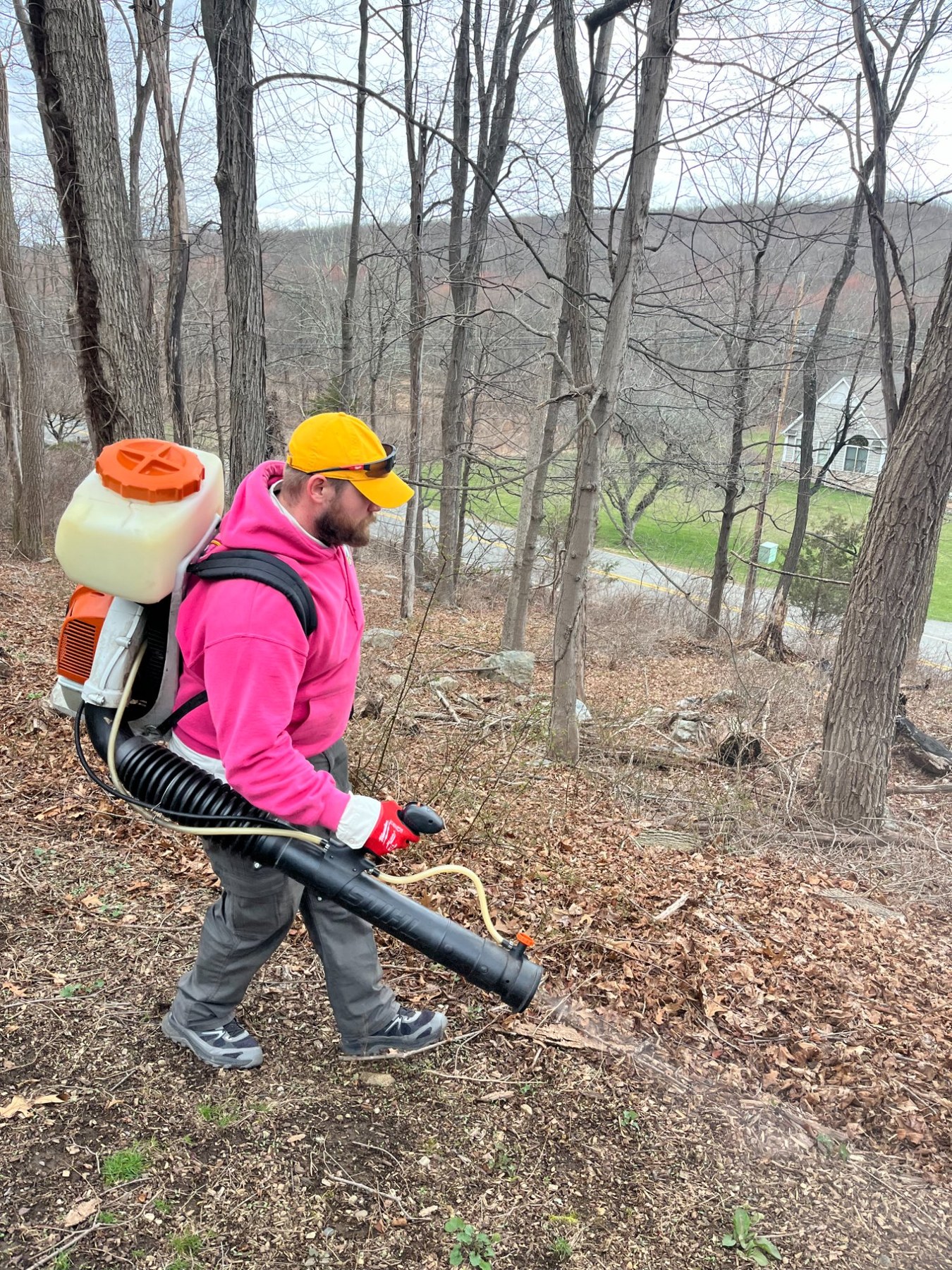
Pops Pest Control team treating wooded property for ticks and mosquitoes
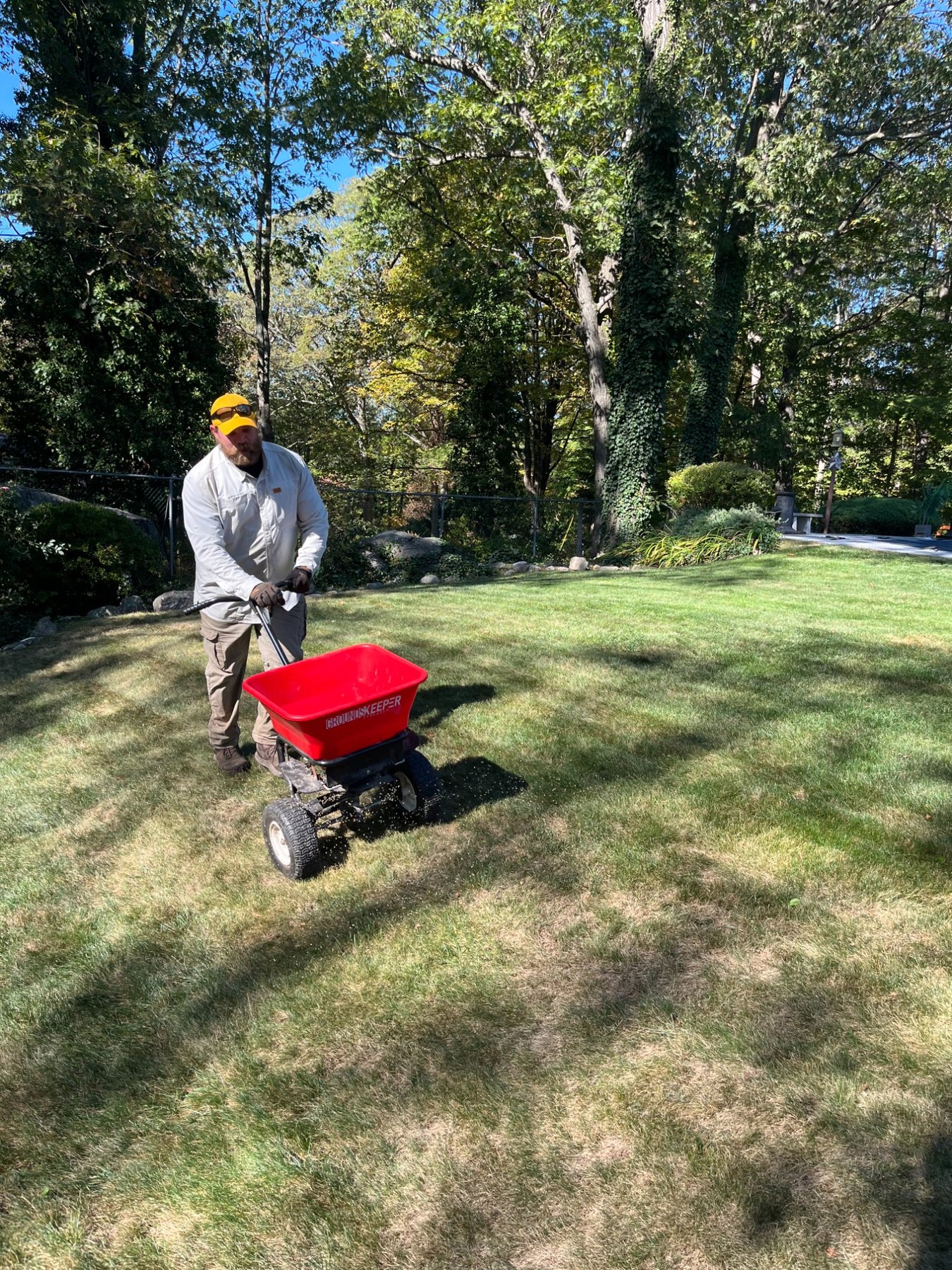
Pops Pest Control team applying lawn fertilizer treatment
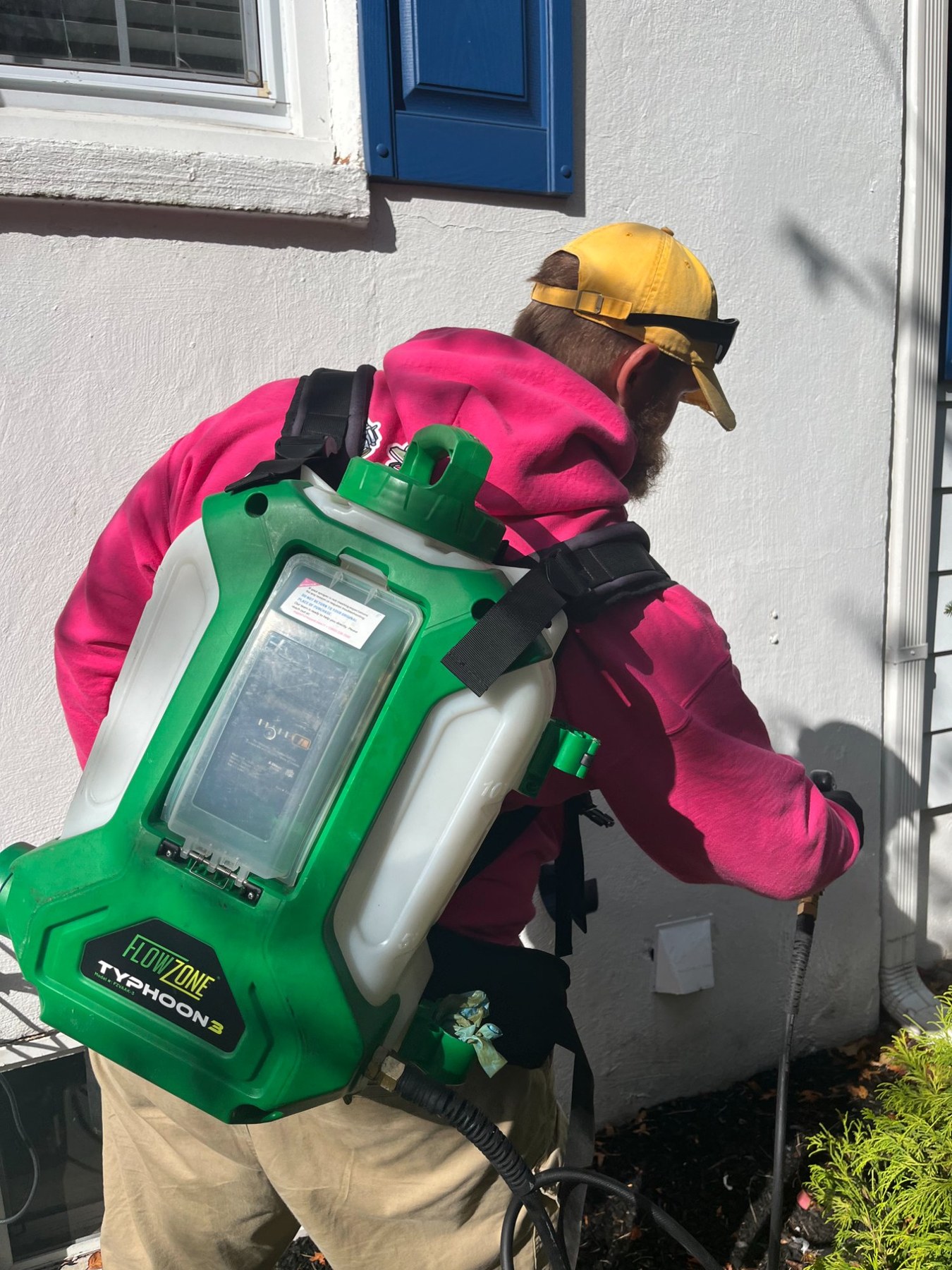
Pops Pest Control team applying perimeter pest treatment
Pops technician preparing botanical spray treatment
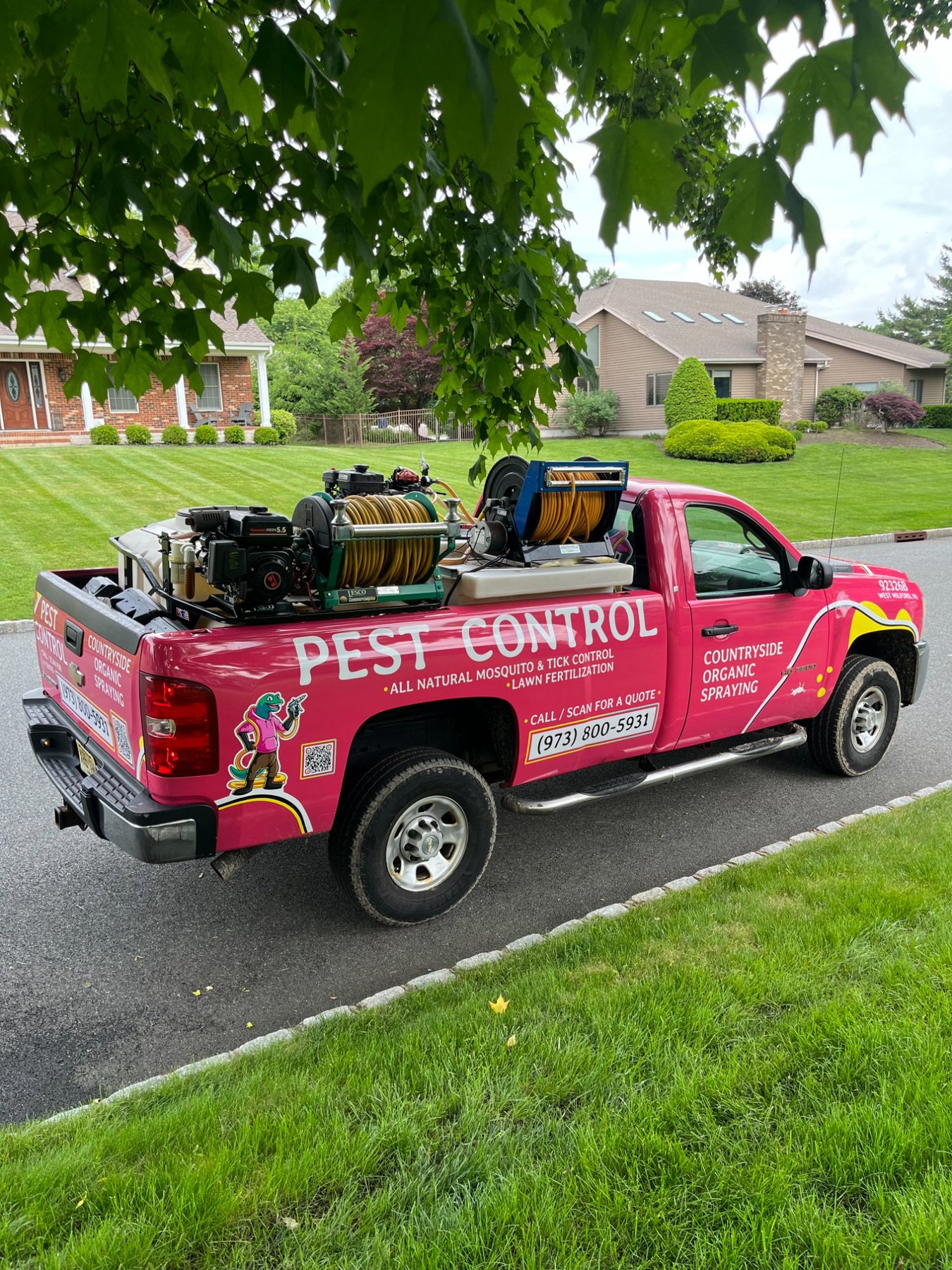
Pops Pest Control fully equipped service truck

Want to Work With Us?

We'd love to take care of your home. Reach out and let's get started.

Get in Touch
POPS

Get in Touch.

Tell us what you need and we'll get back to you fast. Free inspections, honest pricing, no pressure.

Pick Your
Service.

Click a service below and it will be pre-selected in your request.

Request a Free Quote

We'll reach out within one business day — usually much faster.

✦   Thank you! We'll be in touch shortly.

We're a Real
Call Away.

📞

Phone / Text

(973) 800-5931
Call or text us anytime.

📧
📍

Service Area

Bergen, Passaic, Morris & Sussex County, NJ — including Fair Lawn, Glen Rock, Hawthorne, Ridgewood, Wyckoff, Midland Park & surrounding communities.

Response Time

We respond to all inquiries within one business day — usually same day. For urgent issues, call or text directly.

No Contracts. Ever.

We earn your business every visit. No long-term lock-ins, no cancellation fees — just great service that keeps you coming back.

Pops mascot